
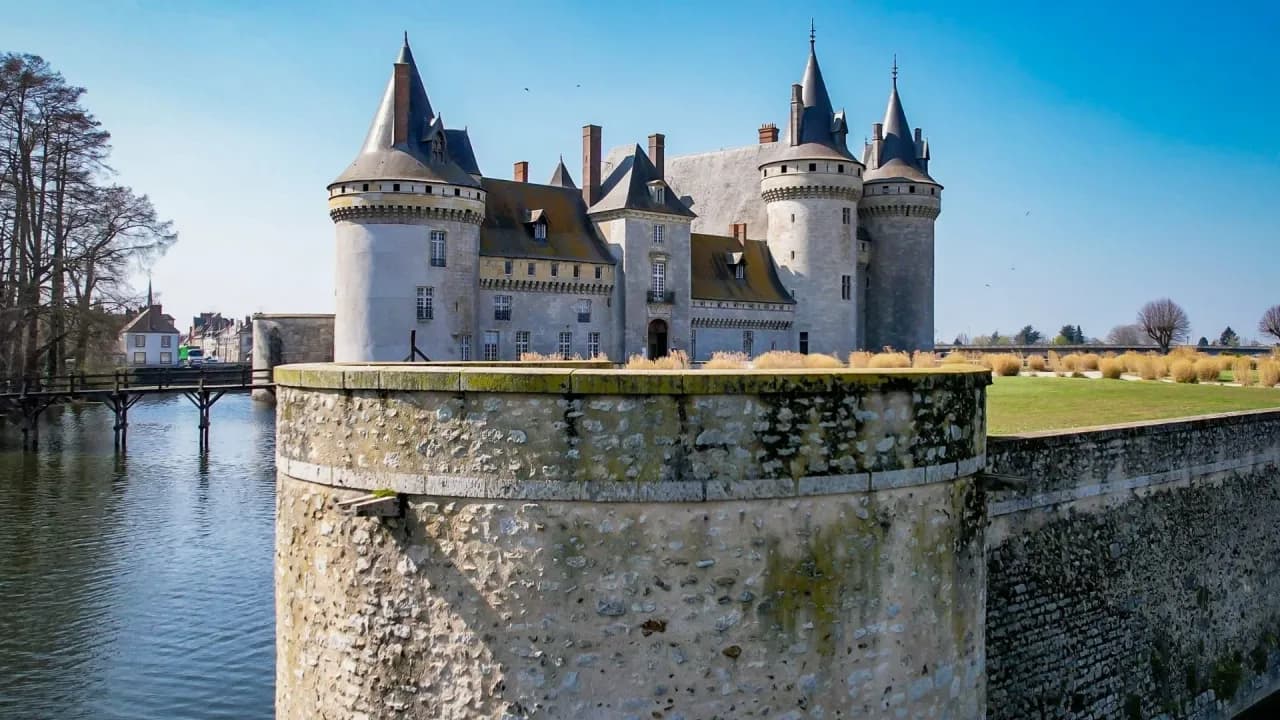
Château de Sully-sur-Loire
Key facts
ProtectionClassé MH
Classé monument historique: the highest level of heritage protection in France, decided by the national government. Any work on the protected parts needs state approval and is supervised by the state heritage services.
About
At the edge of the Sologne, a region in central France, the château de Sully-sur-Loire rises with its round towers on the riverbank, perfectly mirrored in its water-filled moat. It marks the eastern entrance to the Loire Valley, a UNESCO World Heritage site.
Its name is tied to one of the great servants of the state, Maximilien de Béthune, duc de Sully, minister and friend of Henri IV, who made it his home and left it his name.
Construction began in 1396 for Gui VI de La Trémoille, based on plans by the architect Raymond du Temple. The château remained in this family for several centuries before passing to the Béthune family.
Sully entertained guests and worked there; later, the young Louis XIV took refuge there in March 1652 during the Fronde, and Voltaire stayed there as well. These visits have left their mark on the château's history.
The château combines a rectangular keep flanked by four round towers with a more modest residential wing, the whole surrounded by moats that are still filled with water. Its medieval broken-barrel timber roof is considered one of the most remarkable of the 14th century.
Owned by the department, Sully-sur-Loire is open to visitors year-round and has hosted an international music festival since 1973. It carries the Maison des Illustres label.
For future owners
Dreaming of a château like this one?
The founder of So Châteaux has visited more than 500 châteaux in France. He takes no commission on château sales, so he can tell you what he really thinks about any property, completely independently.
See how we help buyersDid You Know?
A young king's refuge
In March 1652, at the height of the Fronde, the young Louis XIV took refuge within the walls of Sully.
Gallery
Frequently Asked Questions
Maximilien de Béthune, minister and friend of Henri IV, who gave the château its name.