
Château de Trévarez
Key facts
About
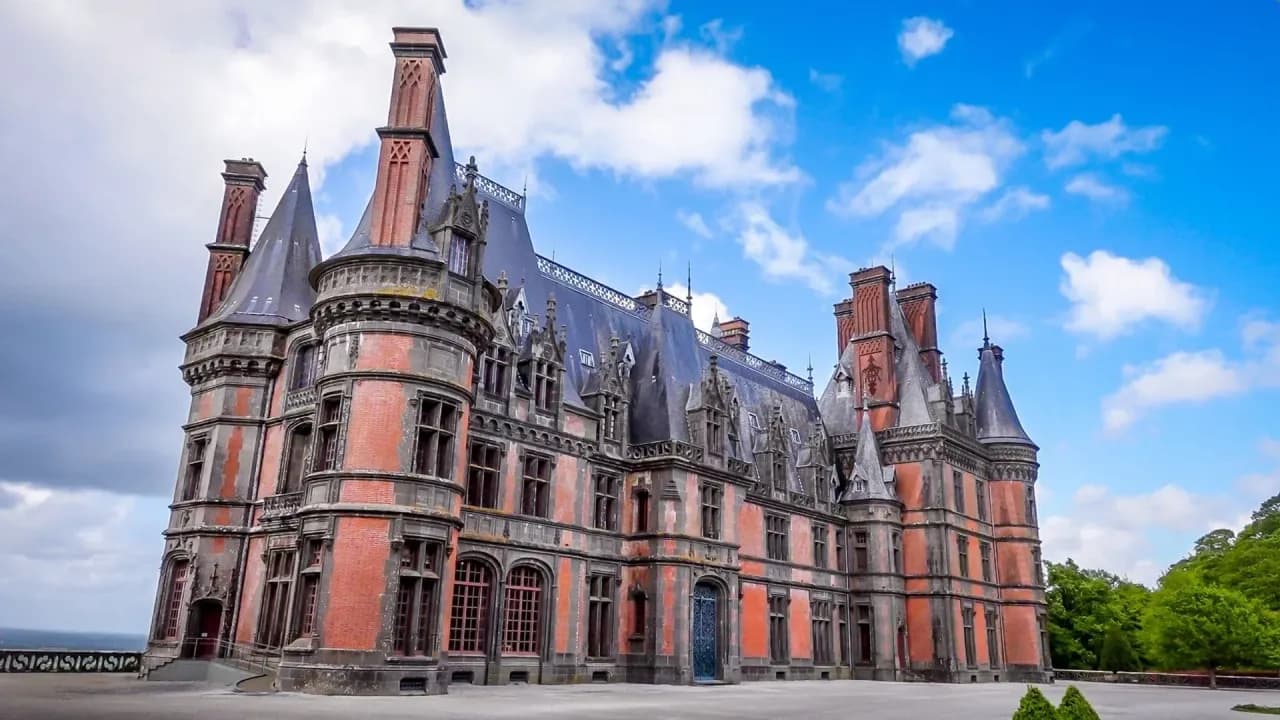
Built at the very end of the 19th century, Trévarez is often described as the last great château of Brittany. Behind its neo-Gothic facade, it was above all a residence offering revolutionary comfort for its time.
Hot water on every floor, elevators, central heating, electricity: its builder, James de Kerjégu, turned it into a showcase of modernity, set deep in the countryside of the Finistère, a department in northwestern France.
Construction began in 1893 based on plans by architect Walter-André Destailleur, who gave the building a metal frame hidden beneath the stone, a bold technical choice for the time.
Occupied by the German army in 1940, the château was bombed by the Royal Air Force on the night of August 4 to 5, 1944. The west wing, blown out across five levels, never recovered. The Finistère department bought the property in 1968.
Eclectic in style, Trévarez blends neo-Gothic touches, Victorian accents, and Breton motifs. Its stonework and the slender silhouette of its roofs give it a distinctive presence.
Now a departmental estate, Trévarez is open to visitors and hosts contemporary art exhibitions. Its 80-hectare park, planted with camellias and rhododendrons, holds the Jardin remarquable label.
For future owners
Dreaming of a château like this one?
The founder of So Châteaux has visited more than 500 châteaux in France. He takes no commission on château sales, so he can tell you what he really thinks about any property, completely independently.
See how we help buyersDid You Know?
One night in 1944
On the night of August 4 to 5, 1944, an Allied bombing destroyed the entire west wing of the château, then occupied by the German army.
Gallery
Frequently Asked Questions
Because of an Allied bombing in August 1944 that destroyed the west wing.